Understanding Cup Size Equivalents: Guide to Perfect Fit
Introduction to Bra Sizes
Bra sizes combine numbers and letters to indicate band and cup size for proper fit, with the number representing the band size and the letter representing the cup size.
Understanding bra sizes is crucial for finding the perfect fit, as wearing the wrong bra size can cause discomfort and fail to support breasts adequately.
Bra sizes can vary between regions, such as Europe and the United States, making it essential to know your size in different systems. Different brands may have their own sizing standards, so it's important to check brand-specific size charts when looking for the right fit.
Learning how to measure your bra size helps ensure a better bra fit, and using a bra size chart can visualize where to measure and how cup sizes increase with volume. Taking accurate measurements is crucial for finding your bra size equivalent across different brands and regions.
Many women experience common fit issues with bras, which is why understanding measurements and bra size equivalents is so important.
Measuring Band Size
-
The bra band size is the number on the bra tag, indicating the rib cage measurement, and band sizes in the U.S. range mostly from 28 to 56.
-
To measure your band size, use a soft tape measure around your chest, under your arms and over the bust, and round your measurement to the nearest even number. When measuring, pay attention to how the band size feels—aim for a snug but comfortable fit.
-
The band should fit snugly on the loosest hook initially to allow adjustment as the bra stretches, and proper fit prevents issues like red marks, irritation, and skin bumps. Only fasten the band on the tightest hook after the bra has stretched out over time.
-
Measuring at home helps you find your correct bra size without special tools, and re-measuring your band and cup size at least once a year ensures accurate fit. Measuring the length of your rib cage accurately is essential for determining the correct band size.
-
If your current bra feels too tight or too loose, you may need to adjust the band size accordingly.
-
Remember to take precise measurements of both your bust and band to find the right fit. US/UK band sizes are measured in inches, and you should round up odd measurements to the nearest even number (e.g., 31 becomes 32).
Bra Band and Fit
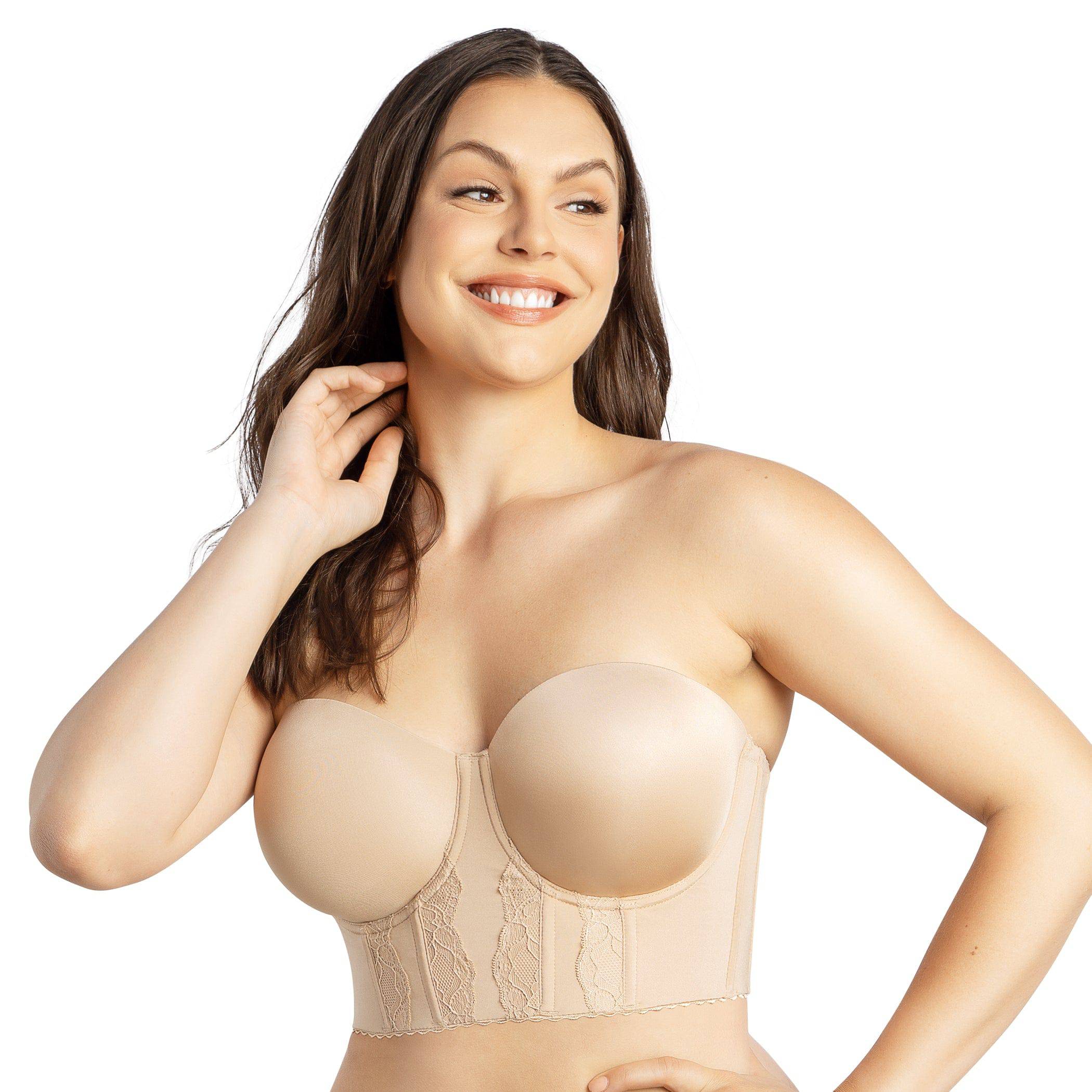
The bra band is the foundation of a well-fitting bra, providing most of the support your breasts need throughout the day. When the band size is correct, it works together with the cup size to create the perfect fit, ensuring that your bra feels comfortable and secure. A properly fitting bra band should feel snug but not overly tight—you should be able to slide one or two fingers underneath the band without difficulty. This balance is key to achieving proper support and avoiding discomfort.
The band size is measured in inches, wrapping around your rib cage just beneath your bust. It’s important to round up to the nearest even number if your measurement falls between sizes. For example, if your rib cage measures 33 inches, your band size would be 34. The band should fit firmly on the loosest hook when you first buy a new bra, allowing you to tighten it as the elastic stretches over time. If the band feels too tight or leaves deep marks, it may be time to try a larger band size. On the other hand, if the band rides up your back or feels loose, a smaller band size will provide better support.
Understanding bra sister sizes is especially helpful when the band or cup doesn’t fit quite right. Sister sizes are alternate bra sizes that have the same cup volume but different band and cup letters. For example, if your usual size is 36C but the band feels too loose, you can try a 34D—this keeps the cup volume the same while giving you a tighter band. A bra sister size chart is a valuable tool for finding these equivalent sizes and achieving the ideal fit, especially when shopping for different brands or styles.
When trying on a bra, pay close attention to how the band fits. The band should sit level around your body and not ride up your back. If the cups fit well but the band is uncomfortable, adjusting only the band size can make a big difference. Conversely, if the band fits but the cups don’t fully encapsulate your breast tissue—causing spillage or gapping—then changing the cup size while keeping the band the same may be the solution. The goal is to find a bra that fits like a second skin, offering both comfort and proper support.
Different brands and bra styles can vary in how their band sizes fit, so don’t be discouraged if your usual size doesn’t feel right in every bra. Trying on several sizes and consulting a sister size chart can help you discover the best fit for your body and breast shape. Remember, the right bra should fully encapsulate your breasts, support your shape, and feel comfortable all day long.
Finding your perfect bra size is a journey that may require some experimentation. By understanding the importance of the bra band and how it works with cup size and sister sizes, you can confidently shop for bras that offer the support, comfort, and style you deserve. Whether you’re looking for a better fitting bra, exploring a new style, or adjusting for changes in your body, focusing on the band and fit will help you achieve the ideal fit every time.
Understanding Cup Sizes
Cup size is the letter next to the band number, determined by subtracting band from bust measurement, and the inch difference between bust and band defines the cup size. Cup letter changes, such as moving from a D cup to an E cup, reflect changes in cup volume, and cup volume stays the same across certain sister sizes.
Cup sizes represent cup volume, which varies relative to band size, and a bra size chart helps visualize where to measure and how cup sizes increase with volume. For example, a D cup or E cup will have different volumes depending on the band size—a 34B has the same cup volume as a 36A or a 32C.
Understanding cup sizes is essential for finding the perfect fit, as cup volume changes relative to band size, and sister sizes maintain similar support. If the band fits but the cups don't, you should change only the cup size (go up or down one cup size as needed) based on your measurements to figure out the correct fit.
Cup sizes can be adjusted to find the perfect fit, and using a bra sister size chart can help identify alternative sizes with the same cup volume. Gapping cups occur if the cups are too large, while spilling over the cups suggests going up a cup size or trying a full-coverage style.
When adjusting your bra size, if you go up a band size, you should go down a cup size to maintain the same cup volume, and if you go down a band size, you should go up a cup size to keep the cup volume consistent. This approach helps you figure out the best fit using your measurements and understanding of cup size equivalents.
Bra Sister Sizes and Alternate Sizes
Bra sister sizes have the same cup volume but different band and cup numbers, and you can find a sister size by increasing band size and decreasing cup size, or vice versa. Your current bra size, also called your current size, is the starting point for finding sister sizes, and a sister bra size chart can help you identify the right size for a comfortable and supportive fit.
Sister sizes offer alternative fits when your usual size is unavailable or uncomfortable, and using a bra sister size chart can help identify sister sizes horizontally. If the cups fit but the band doesn't, you should adjust the band size while keeping the cup size the same.
Sister bra sizes help find the perfect bra fit, comfort, and support when your usual size feels tight, loose, or uncomfortable, and every bra has several sister sizes to help you find the perfect fit. If neither your cup nor your band fits, you should adjust the band size while keeping the cup size the same.
Sister sizes work by adjusting the cup to band ratio: up a cup size means down a band size, maintaining cup volume for a perfect fit, and trying sister sizes can rescue you from ill-fitting bras and improve comfort. For example, if your normal size is 36C and you size down the band, you would move to 34D, these are considered the same size in terms of cup volume and can help you find the right size for better support.
Using a Bra Size Chart
A bra size chart helps visualize where to measure and how cup sizes increase with volume, and using a sister bra size chart can help you figure out which one size or alternate size will provide the best fit by identifying sister sizes horizontally.
Bra size charts can help you find your perfect bra size, including half-cups from A to H, and they support finding your perfect bra fit. Not all bras are one size fits all, so using the chart helps you figure out the most comfortable and supportive option.
A bra size chart is essential for finding the perfect fit, as it provides a guide to bra sizes and helps you understand how to measure your bra size.
Using a bra size chart can help you find the perfect fit, and it’s a valuable tool for anyone looking for a comfortable and supportive bra.
European Bra Sizes and Conversion
-
Bra sizing varies internationally, and European sizes differ from U.S. sizes, making it essential to know your size in different systems. UK DD is equivalent to US DD and EU E, while UK E is equivalent to US DDD/F and EU F.
-
European cups use single letters (A, B, C, D, E, F, G) without double letters like DD, and European band sizes are measured in centimeters. US brands often use multiple 'D's (DD, DDD), while UK brands use double letters or transition to new letters.
-
Converting between European and U.S. bra sizes can be challenging, but using a bra size chart can help. US/UK band sizes are measured in inches, while EU band sizes use centimeters.
-
Understanding European bra sizes and conversion is essential for finding the perfect fit, especially when shopping internationally. UK bra sizing often uses double letters (DD, FF, GG) for larger sizes, while EU follows the alphabet and US uses both systems.
Different brands and bra styles, as well as lingerie options, may fit differently across regions, and straps and style choices can also affect fit.