Cup DD Size: What Double D Really Means and How It Fits

The term “Double D” has taken on a life of its own in popular culture, but what does a DD cup size actually mean when you’re shopping for a bra? Understanding this common size comes down to simple math, body proportions, and knowing how modern bra sizing works.

Whether you’re questioning if you need to size up from a D cup, trying to decode international sizing charts, or simply curious about what cup DD size means for your body, this guide breaks it all down. From measurement techniques to fit troubleshooting, you’ll walk away knowing exactly what cup DD size means for your body.

How big is a DD cup?

Is DD big? The straightforward answer is that DD is a mid-to-full cup size, not an extreme measurement. Is DD bigger than D? Yes, by exactly one cup size, which typically represents about one additional inch of bust measurement relative to the band.

A DD cup represents approximately a 5-inch difference between your snug band measurement around the rib cage and your bust measurement at its fullest point. This applies to most US and UK sizing systems. So if your underbust measures 34 inches and your bust measures 39 inches, you’re looking at roughly a 34DD.

Here’s where it gets interesting: the cup volume of a DD changes dramatically depending on the band size. A 30DD holds significantly less breast tissue than a 38DD because the cup scales proportionally with the frame. On a petite 30 band, DD cups might look quite prominent, while on a 38 band, the same letter appears far more proportional.

Many women wear sizes well beyond DD. Today’s bra industry regularly manufactures sizes through G, H, J, K, and beyond. This means DD sits comfortably in the DD+ range, fuller than A through D cups, but far from the largest available. If you’ve been hesitant about trying a DD, know that it’s one of the most commonly fitted cup sizes among properly sized women.

A woman is standing in front of a mirror, adjusting the strap of her well-fitting bra, which appears to provide support for her DD cup size. She is focused on ensuring the bra fits correctly, reflecting the importance of proper bra fitting for comfort and style.

What does cup DD size mean in bra sizing?

A Double D (DD) is a cup letter that must always be paired with a band number to form a complete bra size. When someone says they wear a DD, they’re only telling half the story, 32DD, 36DD, and 40DD are all vastly different in actual breast volume.

Every bra size combines two elements: a number representing the band length in inches (or centimeters in some regions) wrapped around your chest circumference just below the bust, plus a letter indicating how much the bust projects beyond that measurement. Without both pieces, a size like “DD” is just a number without context.

In inch-based systems like those used in the United States and United Kingdom, each cup letter step equals roughly one inch of difference between band and bust. An A cup represents about 1 inch, B represents 2, C represents 3, D represents 4, and DD represents 5 inches. This progression continues with double letters like DDD, FF, and beyond.

For a concrete example: a 34DD suggests an underbust of approximately 34 inches and a bust of around 39 inches. Meanwhile, a 32DD would pair a 32-inch underbust with roughly a 37-inch bust. The letter stays the same, but the actual measurements shift with the band.

DD belongs to what the industry calls the DD+ or full bust category. Bras in this range are often engineered differently than standard A through D sizes, featuring construction elements designed to support larger cup volumes more effectively. This isn’t about being “plus size” in clothing terms, plenty of petite women wear DD cups on smaller bands.

Understanding that your bra size is always this band and cup size combination is the first step toward finding a well fitting bra that actually supports you throughout the day.

Cup vs band: why a 30DD is not the same as a 38DD

Cup volume changes dramatically with band size. That DD on the label? It’s a relative measurement, not an absolute volume of breast tissue. A 38DD contains significantly more actual breast volume than a 30DD, even though they share the same letter.

30DD fits someone with roughly a 30-inch underbust and 35-inch bust. The cups are scaled for a petite frame, and this size often appears quite full on the body despite being “just” a DD.

34DD suits approximately a 34-inch underbust with a 39-inch bust. This is perhaps the most commonly stocked DD size and appears moderate on an average frame.

38DD accommodates about a 38-inch underbust and 43-inch bust. The cups here hold substantially more volume than smaller-band DDs, though the proportional look on a broader frame may seem similar. For comfortable sleepwear options that flatter a variety of body types, explore the best pajamas for women.

This scaling explains the concept of sister sizes, bras that share the same cup volume but differ in band tightness. A 34DD has approximately the same cup volume as a 32E (one band down, one cup up) and a 36D (one band up, one cup down). The breast space remains similar, but the band fits differently.

Sister sizes matter because the same person might fit several sizes depending on brand variations and how snugly they prefer the bra band. Someone could comfortably wear a 32F, 34E, or 36DD across different manufacturers, finding that each offers a slightly different balance between band tightness and cup containment. This flexibility is normal, not a sign that something is wrong with your measurements.

DD cups in different sizing systems (US, UK, EU)

There is no universal global standard for bra cup sizing, which means a DD in one country might be labeled something entirely different elsewhere. Understanding these regional differences saves enormous frustration when shopping internationally or online.

US vs UK sizing shares some similarities, both use double letters like DD, FF, and GG as cups increase. However, they diverge after DD. Many US brands use DDD for the next size up, while UK brands typically call this E. Some US manufacturers even skip straight to F or label their sizes inconsistently, making brand-by-brand research essential.

Here’s a practical mapping: UK 34DD ≈ US 34DD or 34E depending on the brand ≈ EU 75E. The numbers differ because European bra sizes measure bands in centimeters rather than inches, and continental sizing systems typically don’t use double letters at all. What Americans and Brits call DD is usually sold as E in European sizing.

This means if you’re shopping from a French, German, or Italian brand, you won’t find “DD” on the label. Instead, look for E cup in your converted band size. A US 34DD customer would seek a 75E in european bra sizes.

The practical takeaway? Always check the specific brand’s international size chart before purchasing, especially when ordering from overseas retailers or unfamiliar labels. What fits perfectly in one sizing system may run a full cup larger or smaller in another.

Is D or DD cup bigger? And what about DDD?

DD is one standard cup step larger than D. In most sizing systems, each cup increment adds approximately one inch of bust measurement relative to your band size.

Consider this numeric example: if a 36D suits someone with a 36-inch underbust and approximately 40-inch bust (4-inch difference), then a 36DD would fit about a 41-inch bust (5-inch difference). That single inch makes a noticeable difference in fit and containment.

Beyond DD, the progression continues. DDD (sometimes called F in US sizing) represents one size larger than DD, roughly a 6-inch difference. In UK sizing, this cup is typically labeled E, then moves to F, creating a point of confusion between the two systems. The cup letter sequence in UK sizing goes: D → DD → E → F → FF → G → GG → H, while US sizing often reads: D → DD → DDD/F → G.

What’s important to remember is that DD is nowhere near “the largest size.” Many brands now manufacture bras through DDD sizes, G, H, J, K, and beyond. DD+ sizing has become increasingly common as the industry recognizes that many women were previously wearing incorrectly fitted bras in too-small cups. If you’ve sized out of mainstream A through D sizes, you’re simply moving into a fuller range, not into specialty territory.

How big is a DD cup on the body? appearance & variation

Visual appearance of a DD cup varies enormously depending on the wearer’s overall proportions, height, and individual breast shape. The same cup letter can look dramatically different from one person to another.

On a petite frame, say someone who wears a 30DD or 32DD, the cups may appear quite prominent relative to the torso width and overall stature. A narrow rib cage means the breast tissue projects more noticeably forward, which is why many petite women with DD cups report feeling their bust seems “larger than a DD.”

On a broader frame with a 36DD or 38DD, that same letter often looks proportional and moderate. The wider torso provides more visual balance, and the breast tissue spreads across a larger chest circumference. Someone tall at 5’9” wearing a 38DD may find their bust appears average or understated compared to a 5’2” person in 30DD.

Beyond frame size, breast shape influences appearance significantly. Consider these factors:

  • Tissue density: Firmer, denser breast tissue projects differently than softer tissue, which may settle lower or spread wider

  • Root width: Wide-set breasts spread across the chest, appearing flatter front-on, while close-set breasts create more cleavage and central volume

  • Fullness distribution: Full on top shapes look lifted while full-on-bottom shapes appear teardrop-shaped

Medical and professional bra fitting communities consistently classify DD as falling within an “average to full” range, not inherently extreme or unusual. The letter simply indicates a 5-inch measurement difference, which manifests uniquely on every body.

The image features side-by-side silhouettes of various body frames wearing bras, highlighting the differences in bra sizes, including cup sizes and band sizes. This visual representation emphasizes the importance of finding a well-fitting bra that accommodates different breast shapes and sizes, such as dd cup size and other variations.

DD+ vs A–D: what’s structurally different in the bra?

DD bras aren’t just scaled-up versions of smaller cups. Manufacturers that specialize in DD+ sizes, meaning DD and above, engineer these bras with distinct structural features designed for increased volume and weight.

Firmer underwires provide the foundation for DD+ construction. These wires are often wider and more rigid than those in A through D cups, creating a stable base that prevents the cup from collapsing or distorting under weight. The wires extend further along the sides to encompass all breast tissue.

Multi-panel cups (often 3-part or 4-part construction) allow the fabric to contour around fuller breasts rather than simply stretching across them. Each seam creates shaping, lifting the tissue and projecting it forward instead of flattening. This is why many DD+ wearers find seamed bras more supportive than molded foam cups.

Wider straps distribute weight across more shoulder surface area, reducing the digging and discomfort common when narrow straps bear heavy loads. Similarly, stronger wings (the side panels) extend higher under the arms to keep tissue contained within the cups rather than spilling toward the back.

Sturdier fabrics and reinforced hook and eye closures round out the construction differences. DD+ bands often feature three or four hooks instead of two, anchoring more securely. The band itself may use less stretch and more structured materials.

All of these features recognize a fundamental fact, approximately 85-90% of bra support comes from the band, not the straps. A well-constructed DD+ bra keeps the band level and snug against the body, doing the heavy lifting while straps simply hold cups in position.

Standard A through D bras often use lighter fabrics, fewer construction pieces, and narrower components. They’re designed for smaller volumes that don’t require the same engineering investment.

Who is likely to wear a D vs DD cup?

The difference between needing a D cup or DD cup comes down to measurements and fit signs on your specific body, not stereotypes about body type, weight, or clothing dress size.

Signs you may need a D cup:

You’re currently wearing a C cup that feels too small. Perhaps you notice spillage over the top edge, creating a visible line under fitted clothing. The underwire might be sitting on breast tissue rather than in your inframammary fold (where breast meets chest wall). When you lean forward, tissue escapes the cups rather than staying contained.

Many women who need D cups also notice their bra’s center panel (the fabric between the cups) floating away from their sternum. A properly sized D cup should allow that center gore to tack flat against your body while the cups smoothly encase all tissue without compression.

Signs you may need a DD cup:

You’re wearing a D cup where the band seems to fit snugly on the loosest hook, but the cups themselves create problems. Look for the “quad-boob” effect where tissue spills over the top, creating a second bump under clothing. The cup fabric might stretch taut across your fullest point, or the underwire presses painfully against breast tissue instead of resting comfortably underneath.

If the bra strap constantly slips even when adjusted, it can indicate the cups aren’t large enough to position the strap correctly on your shoulder. Some women also notice the band riding up in back, counterintuitively, this often signals too small a cup rather than too loose a band, because the unsupported weight pulls everything out of alignment.

Both D and DD cups appear across every body type. A petite 28D and a plus-size 44D share only a cup letter, the band measurement radically changes the actual breast volume contained.

When to size up or down between D and DD (fit troubleshooting)

Comfort and proper support come from recognizing fit issues, not from attachment to a particular cup letter on the tag. Here’s how to troubleshoot whether your current size needs adjustment.

When to size up from D to DD:

If you notice tissue overflowing the top of your cups, especially visible as a horizontal line under t-shirts, your cups are likely too small a cup for your breast volume. The underwire should rest in the fold beneath your breast; if it’s riding on breast tissue itself, you need more cup room.

Feeling painful pressure at the cup edge (particularly along the upper curve) also indicates insufficient space. The cup should contain your full bust measurement without compressing. When your bra fits correctly, you shouldn’t experience pinching or cutting in.

When to size down from DD to D:

Gaping at the top of the cups, where fabric pulls away from your chest even when you’re standing straight, suggests excessive cup volume. Wrinkled or loose fabric anywhere in the cup tells the same story. Your breast tissue should fill the cup smoothly without empty space.

If the center gore floats away from your sternum despite a snug band, check whether sizing down in cup helps it tack properly. Sometimes the cups being too large prevents the bra’s structure from sitting correctly against your body.

Always check band fit first. Since roughly 80-90% of support comes from the band rather than straps, ensure your new bra fastens comfortably on the loosest hook (allowing room to tighten as the band stretches with wear). The band should fit snugly and stay level around your torso. Only after confirming band fit should you fine-tune cup size.

How to measure yourself for a DD cup at home

Home measurement gives you a reliable starting point, though brand variation means you may need to try nearby sizes. Keep a flexible tape measure handy, a metal measuring tape won’t conform to your body properly.

Measuring your band size:

Wrap the measuring tape around your rib cage directly beneath your bust, keeping it level and pulling snugly (the tape should fit firmly without pinching). Note this number in inches. For US and UK sizing, round to the nearest even number to find your band. So if you measure 31.5 inches, you’d start with a 32 band; if you measure 33 inches, try a 34 band.

Measuring your bust:

While standing straight in a non-padded bra (or no bra), wrap the tape measure around the fullest point of your bust, typically at nipple level. Keep the tape parallel to the floor without pulling tight, this should be a relaxed measurement around your natural bust size. Record this number in inches.

Calculating your cup size:

Subtract your band measurement from your bust measurement. Each inch of difference corresponds roughly to one cup size: 1 inch = A, 2 inches = B, 3 inches = C, 4 inches = D, 5 inches = DD, 6 inches = DDD/E.

Worked example: Your underbust measures 33 inches and your bust measures 38 inches. Rounding the underbust to the nearest even number gives you a 34 band. The difference is 5 inches (38 minus 33), pointing toward a DD cup. Your starting size would be 34DD in US/UK sizing.

Another example: 30-inch underbust, 35-inch bust. That’s a 30 band with a 5-inch difference, so you’d try 30DD.

Different brands cut differently, so treat these calculations as approximations. Especially for DD+ sizes, consider a professional bra fitting or ordering multiple sizes to compare. Many brands include specific bra measurement guides that may differ slightly from standard calculations. The correct bra size is ultimately the one that fits, not just the number the math produces.

A person is wrapping a soft measuring tape around their ribcage just beneath the bust to determine their band measurement and assess their bra size. This action is essential for finding a well-fitting bra, ensuring the correct band and cup size for optimal comfort and support.

Common myths about DD cup size

Pop culture has created some persistent misconceptions about what “Double D” actually looks like and means. Let’s separate fiction from reality.

Myth: “DD is always huge”

Reality: On a 28 or 30 band, DD cups can appear quite modest because the cup volume scales with frame size. Many women wear sizes far larger than DD, F, G, H, J, and beyond are standard offerings from quality manufacturers. DD sits in the middle of the dd bra size range, not at the extreme end.

Myth: “Only curvy or plus size people wear DD”

Reality: Cup size measures the difference between bust and band, not overall body size or weight. A slim person with a 30-inch underbust and 35-inch bust wears 30DD. Someone larger with a 38-inch underbust and 43-inch bust wears 38DD. Neither person fits a body type stereotype, they simply have the same proportional bust to band relationship.

Myth: “DD bras are bulky or unattractive”

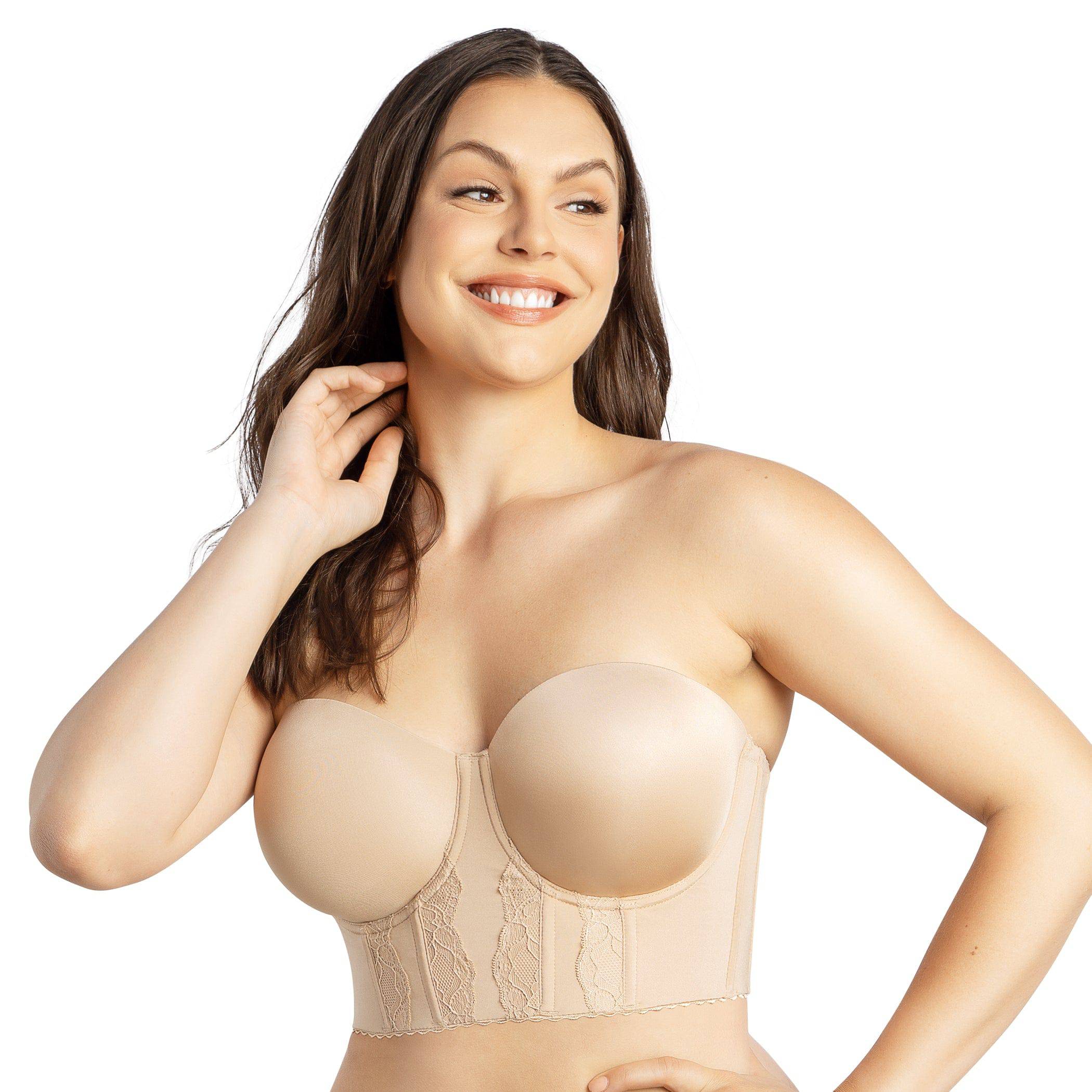
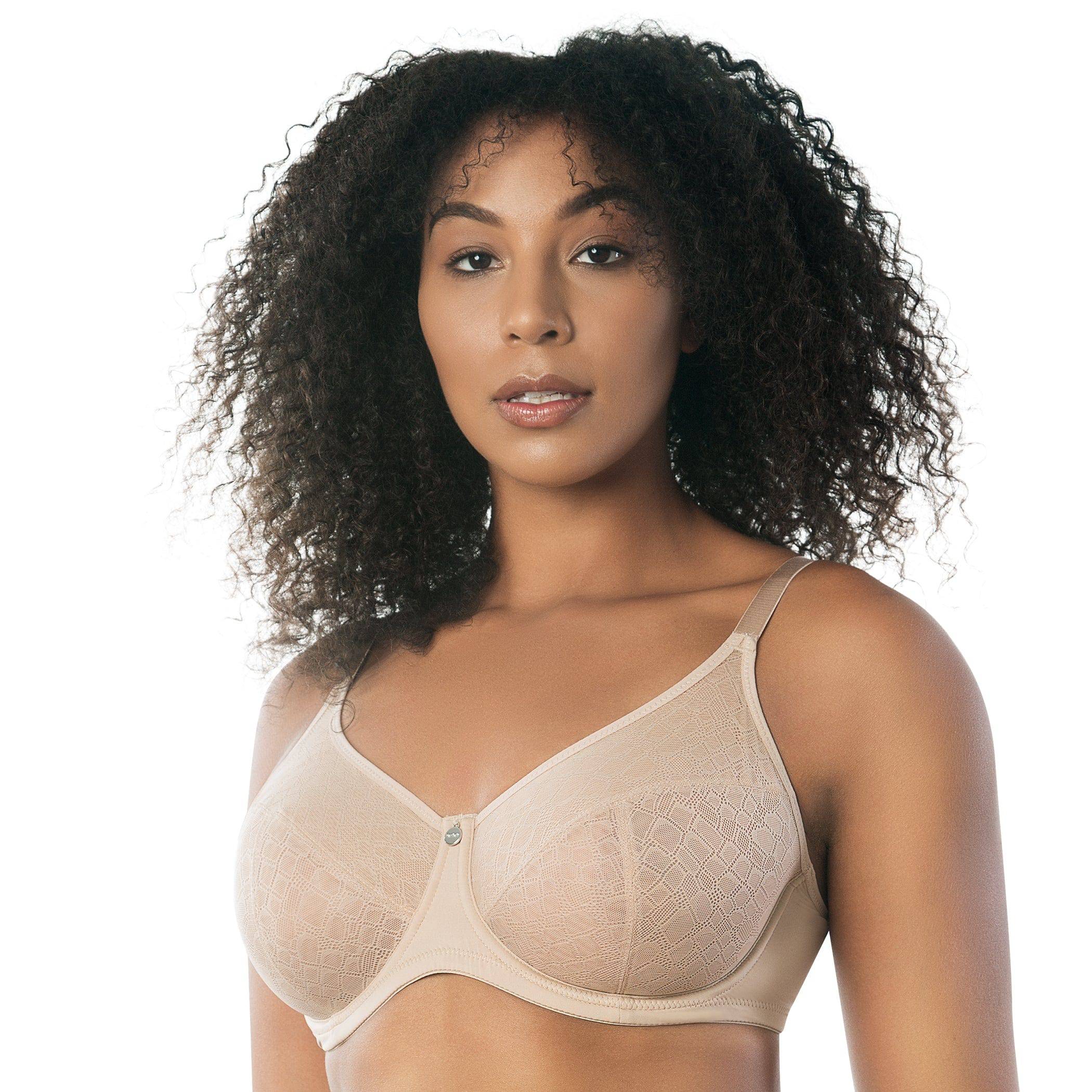
Reality: Modern dd bras come in every style imaginable: delicate lace balconettes, smooth t-shirt bras, plunging necklines, structured sports bras, and even minimalist bralettes specifically designed for DD+ rather than generic S/M/L sizing. The industry has evolved dramatically from the days when fuller cups meant beige and boring.

Myth: “Once you’re DD, that’s your forever size”

Reality: Breast volume changes throughout life due to hormonal fluctuations, pregnancy, breastfeeding, weight changes, aging, and even monthly cycles. Women wear different styles and sizes at different life stages. Regular re-measurement, at least annually, helps ensure you’re always in a properly fitted bra rather than one that fit three years ago.

Choosing bra styles that work well for DD cups

Finding the perfect bra involves matching your size with styles that complement your individual breast shape, whether you’re full on top, full on bottom, wide set, or center full.

Full-cup bras provide maximum coverage and support for DD cups, with cups that extend higher toward the collarbone. These work especially well for fuller shapes and offer secure containment for daily wear. If you find tissue escaping from lower cut styles, full-cup designs may solve the problem.

T-shirt bras with molded cups create a smooth, seamless look under fitted clothing. For DD cups, look for versions with structured underwire rather than soft bralette styles, molded cups without sufficient structure may flatten rather than support. Some women find seamed bras more supportive than molded options at this size.

Balconette styles offer a more open neckline with horizontal cup edges that create lift and rounded shaping. They’re excellent for outfits with lower or wider necklines. Balconettes work particularly well if you’re full on bottom with less upper fullness.

Plunge bras feature cups angled away from center with a lower center gore, ideal for V-neck and wrap style tops. DD+ plunge styles often include additional side support to keep tissue centered despite the open front.

Supportive sports bras for high impact activity should feature encapsulated cups (each breast in its own molded space) rather than compression only designs. Look for wide bands, adjustable straps, and even underwire options designed specifically for movement.

Throughout your search, prioritize bras where the band stays level and snug (not riding up), cups fully contain tissue without spillage or gaping, and straps don’t dig or slip. The printed size matters less than how the bra fits correctly on your unique shape.

The image displays various bra styles, including full cup, balconette, and sports bras, arranged neatly on a neutral background. Each style highlights different cup sizes, such as dd cup size and band sizes, showcasing options for women seeking a well-fitting bra that accommodates their unique bust measurements.

Finding your best cup DD size: practical next steps

DD is a flexible label that shifts meaning based on band size, brand differences, and your body’s unique proportions. Treating it as a starting point rather than a fixed identity makes the fitting process much less frustrating.

Here’s a simple action plan: Measure at home to establish your starting size, perhaps 34DD based on your calculations. Then accept that this is just a number to begin with, not a definitive answer. Order or try nearby sizes like 32E and 36D (sister sizes with similar cup volume but different bands) to see which combination of band snugness and cup containment feels best on the same person wearing different styles. For additional guidance on when to replace your bras, and understanding bra failure causes and prevention, check out this comprehensive guide.

Commit to periodic re-fitting rather than assuming your size from five years ago still applies. Bodies change, after weight fluctuation, pregnancy, hormonal shifts, or simply aging, your ideal size may drift. Many women find they need to adjust band, cup, or both over time. Checking in at least once a year keeps you in bras that actually support you rather than bras that technically match an old measurement.

Finally, remember that comfort, support, and confidence matter infinitely more than the letters and numbers on a tag. Whether you end up in a D, DD, E, or somewhere else entirely, the correct fit is the one where you can move through your day without adjusting, pulling, or wincing. Your best size is whichever combination of band and cup makes you forget you’re wearing a bra at all, that’s the true definition of a well fitting bra.

Continue Reading