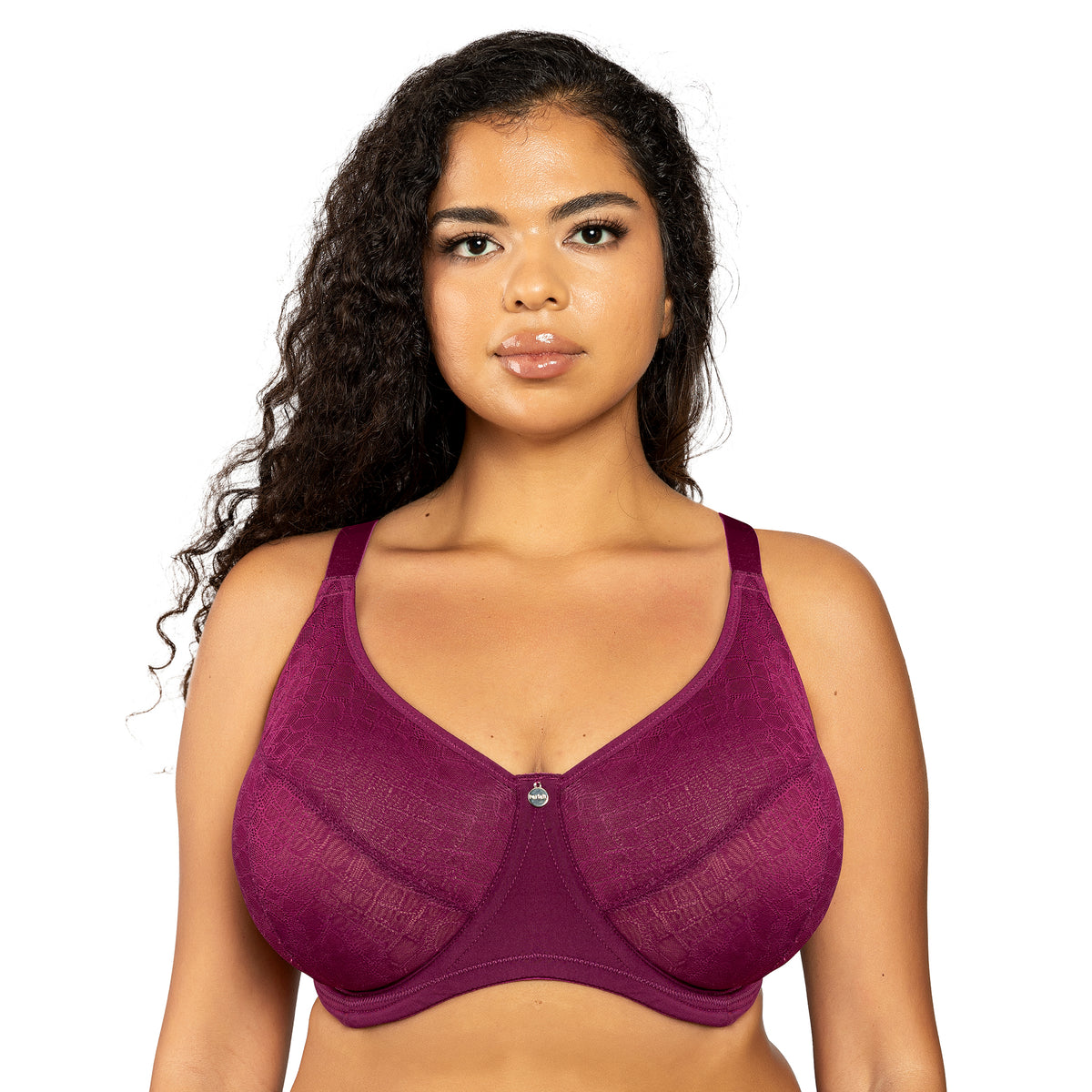
40B Bra Size Equivalent: Sister Sizes and Fit Guide
Finding the right bra size can feel like solving a puzzle, especially when the size you think you are doesn’t fit the way you expected. If you’ve been wearing a 40B or wondering whether it’s the right fit, you’re not alone. Understanding your 40B bra size equivalent options can save you from endless returns and uncomfortable bras.
This guide breaks down everything you need to know about 40B sizing, from sister sizes and cup volume to practical fit advice that actually works. Whether you’re troubleshooting a bra that doesn’t feel quite right or navigating bra shopping across different brands, you’ll walk away with the knowledge to find your perfect fit.
What Is a 40B Bra Size?
A 40B bra size refers to a bra with a 40-inch band and a B cup. In US sizing, this typically fits someone with a snug underbust measurement of about 40 inches and a bust measurement of approximately 42 inches, creating that 2-inch difference that defines a B cup.
When people search for a “40B bra size equivalent,” they’re usually looking for one of two things: sister sizes that offer similar cup volume with a different band length, or nearby sizes to try when 40B doesn’t fit quite right.
-
The main 40B sister sizes are 38C (smaller band, larger cup letter) and 42A (larger band, smaller cup letter)
-
These sizes share roughly the same cup volume as 40B but offer different band fits
-
A B cup on a 40 band is not the same cup volume as a B cup on a 34 band, this is a common misconception
-
Extended sister sizes include 36D and 44AA, though these may be harder to find
The key takeaway: “equivalent” doesn’t always mean identical. It means finding a size that gives you the same cup volume or a better overall fit.
How Bra Sizing Works (Band + Cup Basics)
Every bra size combines two measurements: the band size (the number) and the cup size (the letter). Understanding how these work together is essential before exploring your options.
Measuring your band size involves wrapping a tape measure snugly around your ribcage, directly under your bust. Keep the tape parallel to the floor and note the measurement in inches. If you get 40 inches, you’re typically looking at a 40 band in US sizing.
Measuring your bust means wrapping the tape measure around the fullest point of your chest. For the most accurate reading, wear a thin, non-padded bra and don’t pull the tape too tight.
The difference between these two measurements determines your cup size using the inch-difference system common in US sizing:
-
1-inch difference = A cup
-
2-inch difference = B cup
-
3-inch difference = C cup
-
4-inch difference = D cup
Here’s a worked example: If your underbust measures 40 inches and your bust measurement at the fullest point is 42 inches, that’s a 2-inch difference, which translates to a 40B.

Keep in mind that sizing systems differ slightly by country. US and UK sizing are generally similar for B cups, though EU sizing uses different numbers (more on that later). Also note that breast tissue distribution and shape can make two women with identical measurements wear different sizes comfortably. Your measurements are a starting point, not a final answer.
40B Sister Sizes: Direct Equivalents in Cup Volume
Sister sizes, sometimes called bra sister sizes are different band and cup combinations that share roughly the same cup volume. This concept is incredibly useful when your current bra size feels close but not quite right.
The rule is straightforward: when you go down one band size, go up one cup letter. When you go up one band size, go down one cup letter. This maintains similar cup volume while adjusting the band length.
For 40B, here’s how the sister size chain works:
38C ↔ 40B ↔ 42A
Moving down: 38C has a smaller, tighter band but a slightly deeper cup. Moving up: 42A has a looser band but a shallower cup letter. Both share approximately the same cup volume as your 40B.
If you extend the chain further, you get 36D (down two band sizes, up two cup letters) and 44AA (up two band sizes, down two cup letters). However, these extended sizes can be difficult to find, and the fit differences become more pronounced the further you move from your original size.
According to underwire sizing guides, all sister sizes of 40B use the same size 40 underwire, confirming they truly share identical cup volumes despite their different labels.
Here’s when sister sizes help in practice: If your 40B cups fit perfectly but the band feels too tight and you’re already on the loosest hook, trying 42A might solve the problem without changing your cup fit. Conversely, if the band feels a bit loose and slips up your back, 38C could provide better support while keeping the same breast coverage.
One important caveat: cup volume is similar across sister sizes, but not always identical across different brands. Some bras run small or large in the cups, so you may still need to try a few options.
Comparing 40B to Nearby Sizes (40A, 40C, 38C, 42A)
When 40B doesn’t feel right, these are the most common sizes to consider. Understanding exactly how they differ helps you make smarter choices when bra shopping.
40A vs 40B
Both share the same band size, but 40A has approximately 1 inch less cup depth. A 40A typically fits someone with about a 41-inch bust measurement (compared to 42 inches for 40B). If your current bra cups gap at the top or the bra cups feel too tall for your breasts, 40A might be a better match.
40C vs 40B
Again, the same band size, but 40C offers about 1 inch more cup depth. This fits approximately a 43-inch bust. If you’re experiencing spillage over the top of your 40B cups, if the center gore doesn’t lie flat against your chest, or if the underwire sits on breast tissue instead of around it, 40C is worth trying.
40B vs 38C (Sister Size)
This is where things get interesting. The 38C is a sister size to 40B, the band is 2 inches smaller, but the cup letter is one size larger. The result: roughly similar cup volume with a significantly different band experience. If your 40B band rides up in the back or feels loose even on the tightest hook, 38C gives you that snugger band while maintaining similar cup coverage.
40B vs 42A (Sister Size)
The opposite direction: 42A has a band that’s 2 inches larger with a cup letter one size smaller. Same cup volume logic applies. If your 40B band digs in painfully, leaves deep red marks, or feels restrictive even on the loosest hook, 42A offers relief without changing how much breast tissue the cups hold.
A crucial clarification: 40B isn’t universally “bigger” or “smaller” than 38C. The band is larger but the cup letter is smaller. Whether one feels bigger depends on whether you’re comparing band fit or bust coverage, they’re different dimensions of the same garment.
How to Tell If 40B Is the Right Size For You
The number on the tag matters far less than how the bra fits properly on your body. Comfort, support, and shape are what you’re really after. Here’s how to evaluate whether your current bra is working.
Signs your 40 band fits correctly:
-
The band lies level all the way around your body, not riding up in the back
-
You can fit two fingers under the band comfortably, but no more
-
When new, the bra feels snug on the loosest hook (giving you room to tighten as the band stretches over time)
Signs the 40 band is too tight:
-
You experience painful pressure or difficulty breathing
-
Deep red marks remain on your skin after removing the bra
-
Severe digging occurs even when wearing the loosest hook
Signs the B cups are too big:
-
Gaping at the top of the cups
-
Wrinkling in the fabric
-
The bra cuts into your armpit area because the cups are too tall for your breast shape
Signs the B cups are too small:
-
Breast tissue spills over the top or sides of the cups
-
The center gore doesn’t tack flat against your sternum
-
The underwire sits on your breast tissue rather than in your inframammary fold

Based on your observations, here’s your adjustment guide:
-
Band OK, cups too big → try 40A
-
Band OK, cups too small → try 40C
-
Cups OK, band too tight → try 42A (sister size)
-
Cups OK, band too loose → try 38C (sister size)
One technique worth knowing: the “scoop and swoop” method. Lean forward, fasten your bra, then use your hand to scoop breast tissue from under your arms and your sides into the cups. This ensures all your tissue is actually inside the bra before you judge the fit. Sometimes cups that seem too big are actually the right size, the tissue just wasn’t fully positioned inside them.
40B in Different Brands and Styles
Here’s something every experienced bra shopper knows: a 40B can feel completely different depending on which brand or style you’re wearing. The label might be identical, but the fit can vary dramatically.
Style differences within 40B:
Full-coverage bras in 40B typically feel taller and more covering than plunge or balconette styles in the same size. A seamless bra or bralette in 40B may fit looser than a structured underwire style. Sports bras often use different sizing systems entirely, sometimes converting to S/M/L categories.
Brand tendencies:
Some brands consistently run tighter in the band. Many UK brands are known for firmer, less stretchy bands, if you’re trying a new style from a UK-based manufacturer and you usually wear 40B, you might find their 40B band feels snugger than expected. Conversely, some US department-store brands use stretchier materials, meaning their 40B might feel a bit loose compared to your usual size.
Always check each retailer’s bra size chart and customer reviews before purchasing online. A five-minute review scan can save you a frustrating return. For more tips on supportive swimwear, check out white bathing suit tops for large busts.
Plus size focused brands:
Brands that specialize in larger band sizes often start around 38-40 bands. In these ranges, 40B might be one of their smaller cup offerings, but the band construction tends to be more supportive and structured than you’d find in a brand primarily focused on smaller sizes.
The practical advice: don’t assume your perfect size in one bra will work in another. A 40B T-shirt bra fits differently than a 40B lace balconette or a 40B sports bra due to fabric, construction, and intended purpose. When trying a new brand or new style, approach it with the expectation that you might need to try adjacent sizes.
How to Measure Yourself if 40B Feels Wrong
If your 40B bras consistently feel too big, too small, or just wrong, it’s time to grab a measuring tape and double check your numbers. Bodies change, and the bra size that worked two years ago might not be your correct bra size today.
Measure your underbust (band measurement)
Stand straight and wrap a tape measure snugly around your ribcage, directly under your bust. Keep the tape parallel to the floor. Don’t hold your breath or suck in—just breathe normally. Note the measurement in inches.
Step 2: Measure your bust
Wrap the tape measure around the fullest point of your bust. For best accuracy, wear a thin, unpadded bra. Again, keep the tape parallel to the floor and don’t pull too tight. Note this measurement.
Step 3: Calculate the difference
Subtract your band measurement from your bust measurement. Use the inch-difference chart:
-
1 inch = A cup
-
2 inches = B cup
-
3 inches = C cup
-
4 inches = D cup

Worked example:
Let’s say you measure 39 inches at the underbust and 41 inches at the bust. That’s a 2-inch difference, pointing toward a B cup. But what band size?
Since band sizes come in even numbers, you’ll need to round. If you prefer a snugger fit, round down to 38, making your starting size 38B. If you prefer a looser band, round up to 40, giving you 40B. You might also try 38C (the sister size with a smaller band) or 40A depending on how your own bra size typically runs.
The calculated size is your starting point. From there, try on a few options and use the fit criteria from earlier to narrow down. Tissue softness, posture, and even the time of month can affect what feels like the best fitting bra. Don’t expect one calculation to give you a definitive answer, expect it to give you a smart place to start.
Consider using a bra size calculator online to double check your math, but remember that calculators work from measurements and can’t account for shape, tissue density, or personal preference.
Frequently Asked Questions About 40B Equivalents
Is 40B the same as 38C?
Not exactly, but they’re close. 40B and 38C are sister sizes, meaning they share roughly the same cup volume. The difference is in the band: 38C has a smaller, tighter band with a larger cup letter, while 40B has a roomier band with a smaller cup letter. If your 40B band feels loose or rides up, 38C might give you the support you need while fitting your bust similarly.
Is 40B a big or small bra size?
Neither, it’s all relative to body frame. A 40 band indicates a larger ribcage (around 40 inches underbust), while a B cup represents a moderate bust volume relative to that frame. Many women with broader shoulders or larger ribcages wear 40 bands comfortably. Calling any bra size “big” or “small” without context doesn’t tell you much.
What if the calculator says 40B but the bra cups are huge on me?
First, double-check your measurements, even a half-inch error can throw things off. Second, make sure you’re scooping all breast tissue into the cups before judging (use the scoop and swoop method). If the cups still gap or wrinkle, your current bra size sister might work better, try 40A for shallower cups or 38C if you also need a firmer band.
Are 40B sizes the same in US and UK?
For B cups, US and UK sizing aligns closely. The band number (40) and cup letter (B) translate directly between systems. The differences between US and UK sizing become more significant at larger cup sizes (DD, DDD, etc.), where letter progressions diverge. For 40B specifically, you can generally trust that a US 40B and UK 40B will fit similarly.
What is the European equivalent of 40B?
In EU sizing, 40B converts to approximately 90B. European sizing uses centimeter-based band numbers rather than inches, so the number changes (40 becomes 90), but the cup letter stays the same. If you’re shopping from a European brand, look for 90B as your equivalent size.
Conclusion
40B fits approximately a 40-inch underbust and 42-inch bust (2-inch difference)
Primary sister sizes for 40B are 38C and 42A, same cup volume, different band lengths
Use fit signs (gaping, spillage, band riding up) to determine whether to adjust cup size or band size
Different brands and styles can make the same 40B label fit very differently
Measure yourself with a tape measure if your current bra size isn’t working, then try adjacent sizes
Finding your right bra size isn’t about landing on a magic number, it’s about understanding how band and cup sizes work together and knowing which direction to adjust when something feels off. Start with your measurements, try your sister sizes, and don’t be afraid to experiment with different styles until you find bras that actually work for your body.