34DD vs 32DDD: What’s the Real Difference?
If you’ve ever found yourself standing in a fitting room holding a 34DD in one hand and a 32DDD in the other, wondering which one actually fits your body, you’re not alone. This is one of the most common sizing questions women face, and the answer isn’t as complicated as it might seem.
Is 34DD the same as 32DDD?
Here’s the short version: 34DD and 32DDD have almost the same cup volume, but they fit differently around your ribcage. The 32 band is tighter and smaller than the 34 band.
These two sizes are what’s called “sister sizes”, they share nearly identical cup capacity, but the band circumference differs by about 2 inches. This means:
-
Same approximate breast volume in the cups
-
Different fit and support around your ribcage
Quick Comparison:
|
Feature |
32DDD |
34DD |
|---|---|---|
|
Band |
32 inches (tighter) |
34 inches (looser) |
|
Cup Letter |
DDD |
DD |
|
Cup Volume |
Very similar |
Very similar |
Many women who bounce between these sizes are actually in between band sizes. You might need to experiment with different brands or styles to find what works best for your body. One brand’s 32 band might feel like another brand’s 34.
Understanding bra sizes: band and cup basics
Let’s break down what those numbers and letters actually mean. The number (32, 34) represents your band size, while the letter (DD, DDD) indicates your cup size based on the difference between your bust and underbust measurements. Wearing the right size bra can also enhance your comfort in sleepwear, if you want to treat yourself to cozy nights, check out these nice pajamas that combine both comfort and style.
If the 32DDD band is uncomfortably tight, but you don't want to lose cup volume, consider switching to a 34DD.Here’s a concrete example: if your underbust measures 31 inches and your bust measures 38 inches, you have a 7-inch difference. In US sizing, this typically corresponds to a G cup range, though labels vary wildly depending on the brand you’re looking at. The 34DD offers a slightly looser, more comfortable fit for average, athletic, or hourglass bodies. A 34DD bra is designed for a 34-inch underbust and 39-inch bust, offering a moderate fit for average frames. While volumes are similar, the 32DDD cup is typically narrower and more projected, whereas the 34DD cup is slightly wider and shallower. A 32DDD often provides better support for those with a smaller ribcage because the tighter band carries most of the breast weight. The 32DDD is often preferred by those with a smaller ribcage but more breast tissue. Each inch that breasts project from the ribcage is considered one cup size. In reality, cup size is relative to band size, so a 'D cup' on a smaller band is not the same volume as a D cup on a larger band.
Your band size is usually based on a snug underbust measurement in inches. Someone with a 31-inch ribcage often fits best in a 30 band or 32 band, depending on personal preference for tightness and how much the bra’s band stretches.
Cup letters do not have an absolute volume. A 32DDD holds less actual breast tissue than a 38DDD because cup size scales proportionally with band size.
This is the concept that trips most people up. Check out how the same volume can appear with different size labels:
-
32DDD ≈ 34DD ≈ 36D (all hold roughly the same cup volume)
-
30F ≈ 32DDD ≈ 34DD (moving down in band, up in cup)
-
34DD ≈ 36D ≈ 38C (moving up in band, down in cup)
One more thing worth noting: different countries use slightly different letter progressions. US brands typically go D, DD, DDD (sometimes labeled F), while UK and EU brands use D, DD, E, F. Always check which system a brand uses before you buy, or you’ll end up with conversion charts that only add to the confusion.
34DD vs 32DDD: sister sizes explained
Sister sizes are sizes that share very similar cup volume but have different band lengths. Think of them as cousins in the bra world related, but not identical.
The principle works like this: moving one step down in the band while moving one step up in the cup keeps the cup volume roughly the same. This is why 32DDD, 34DD, and 36D are all sister sizes to each other. The sister size of a 32DDD is a 34DD. A 36C, 34D, and 32DD are all the same cup size, but the band size differs. For a precise fit, you can use the ABraThatFits Calculator to determine your starting size based on six specific measurements.
To spell it out explicitly: 32DDD and 34DD use cups of nearly the same volume, but the 32 band is about 2 inches smaller around than the 34 band.
What does this mean in practice? The 32DDD will feel tighter and more secure on your ribcage, providing more lift and support. The 34DD will feel looser and may ride up in the back if the band is too big for your body.
Sister Size Ladder:
-
30F (US) / 30E (UK)
-
32DDD (US) / 32E (UK)
-
34DD (US) / 34DD (UK)
-
36D (US) / 36D (UK)
-
38C (US) / 38C (UK)
Note that tiny differences in wire width and cup height can exist between sister sizes depending on brand and model. A 32DDD from one manufacturer might have slightly narrower wires than their 34DD. This is why trying both sizes matters, you might love one and hate the other even though they’re technically equivalent in volume.

Fit symptoms: which one is right for your body?
The correct size choice depends on how the bra actually behaves on your body, not just what the tag says. A bra can be technically “your size” and still fit terribly if the band or cup doesn’t match your proportions.
Signs your band is too loose (common in 34DD when you need 32):
-
Band rides up in the back throughout the day
-
Straps dig into your shoulders because they’re doing the lifting
-
Cups tip forward or down
-
You’re on the tightest hook from day one
-
You can pull the band more than 2 inches away from your body
Signs your band is too tight (what some feel in 32DDD):
-
Painful pressure that doesn’t ease after a few minutes
-
Difficulty breathing deeply
-
Band leaves deep red marks that don’t fade after 20-30 minutes
-
Feeling like you’re being squeezed all day
Cup-related symptoms to watch for:
-
Cup too small: quad-boob or spillage over the top, wires sitting on breast tissue instead of around it, center gore (the part between the cups) not lying flat against your sternum
-
Cup too large: wrinkling or gaping at the top of cups, gore floating away from chest even when band feels snug
Here’s a scenario many women face: if 34DD cups fit great but the band is loose, and 32DDD band fits but the cups feel small, you probably need 32F or 32G depending on the sizing system. The solution isn’t to compromise, it’s to find the right combination.
Always test fit on the loosest hook of a new bra. Bras stretch over time, and starting on the loosest hook gives you room to tighten as the band relaxes. And don’t forget to scoop and swoop, reach into each cup and pull all your breast tissue forward and into the cup before judging the fit.
Measurement examples: 31” underbust and beyond
Let’s look at a typical case: you measure 31 inches around your underbust and you’re unsure whether 34DD or 32DDD is correct based on how they feel in stores.
Concrete measurement example:
-
Snug underbust: 31 inches
-
Tight underbust: 30 inches
-
Standing bust: 38 inches
-
Difference: 7-8 inches
In modern fitting methods, this often points to a 30F-30FF or 32E-32F in UK sizing, which translates to roughly 32DDD-32G in US sizing. Not the 34DD that many department stores would suggest.
If you have a 31-inch underbust and wear a 34DD, you might notice the band constantly riding up your back. That’s a clear sign the band is too large for your frame. A 32 band or even a 30 in some brands, would typically provide better support.
But here’s where it gets interesting: if 32DDD cups feel small for you, the answer isn’t to go back to 34DD. The next logical step is to try 32G (US) or 32F/32FF (UK). Going up in cup while keeping the tighter band gives you both the support and the room you need. For those interested in additional support, such as shapewear options designed for comfort and a flattering fit for older women, exploring specialized garments can make a difference.
How to measure yourself:
-
Tight underbust (exhale and measure snugly)
-
Snug underbust (normal breathing, comfortable tension)
-
Standing bust (at the fullest point)
Cross-check your numbers with online calculators like the ABraThatFits calculator to get a starting point. These tools use multiple measurements to suggest sizes you might not have considered.
Keep in mind that measurements are starting points, not final answers. Different breast shapes, full on top versus full on bottom, projected versus shallow, will affect which size and style actually works for your body. Two women with identical measurements can wear completely different sizes because their breasts distribute differently.
Shape, projection, and style: why 34DD and 32DDD don’t always feel the same
Even when two sizes share similar cup volume, breast shape and bra style can make one feel dramatically better than the other. This is why you might love a 32DDD in one bra and hate it in another.
Projection matters: Very projected breasts, those that stick out significantly from the chest wall, often feel better in snugger bands like 32. The tighter band keeps the wires close to the ribcage, creating a more secure fit. Shallow breasts, which have more horizontal spread, may tolerate a looser 34 band if the cups are wide and open at the top.
Root width varies: Breast roots (where your breast tissue attaches to your chest) can be narrow or wide. Narrow rooted breasts often prefer brands where wires are closer together, regardless of whether you’re wearing 32DDD or 34DD. If wires poke into your armpits, the cups might be too wide for your root.
Style differences in the same size:
-
Balconette bras: More open on top, good for full on bottom shapes
-
Plunge bras: Lower center gore, can work well for close set breasts
-
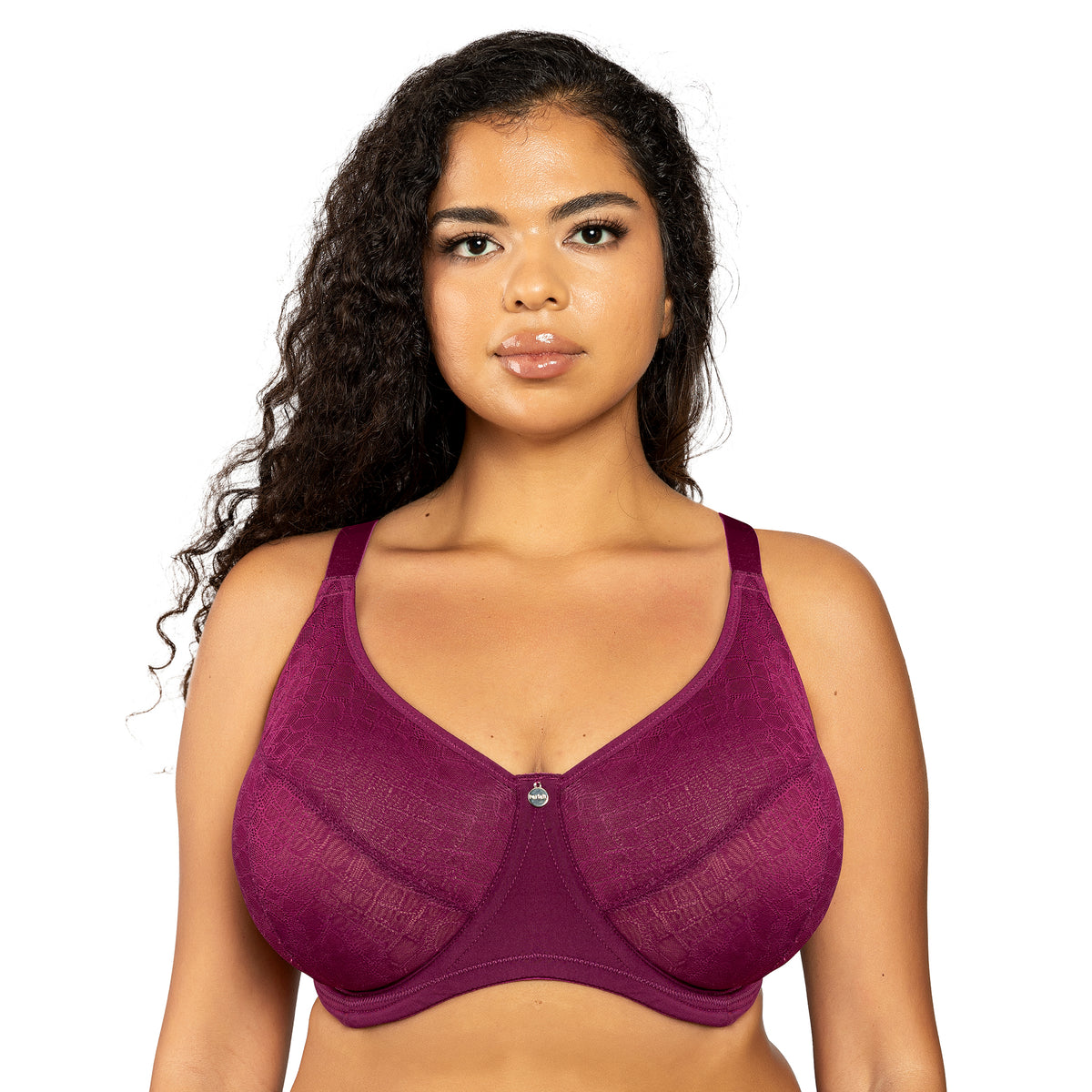
Full coverage: Maximum containment, often better for full on top shapes
-
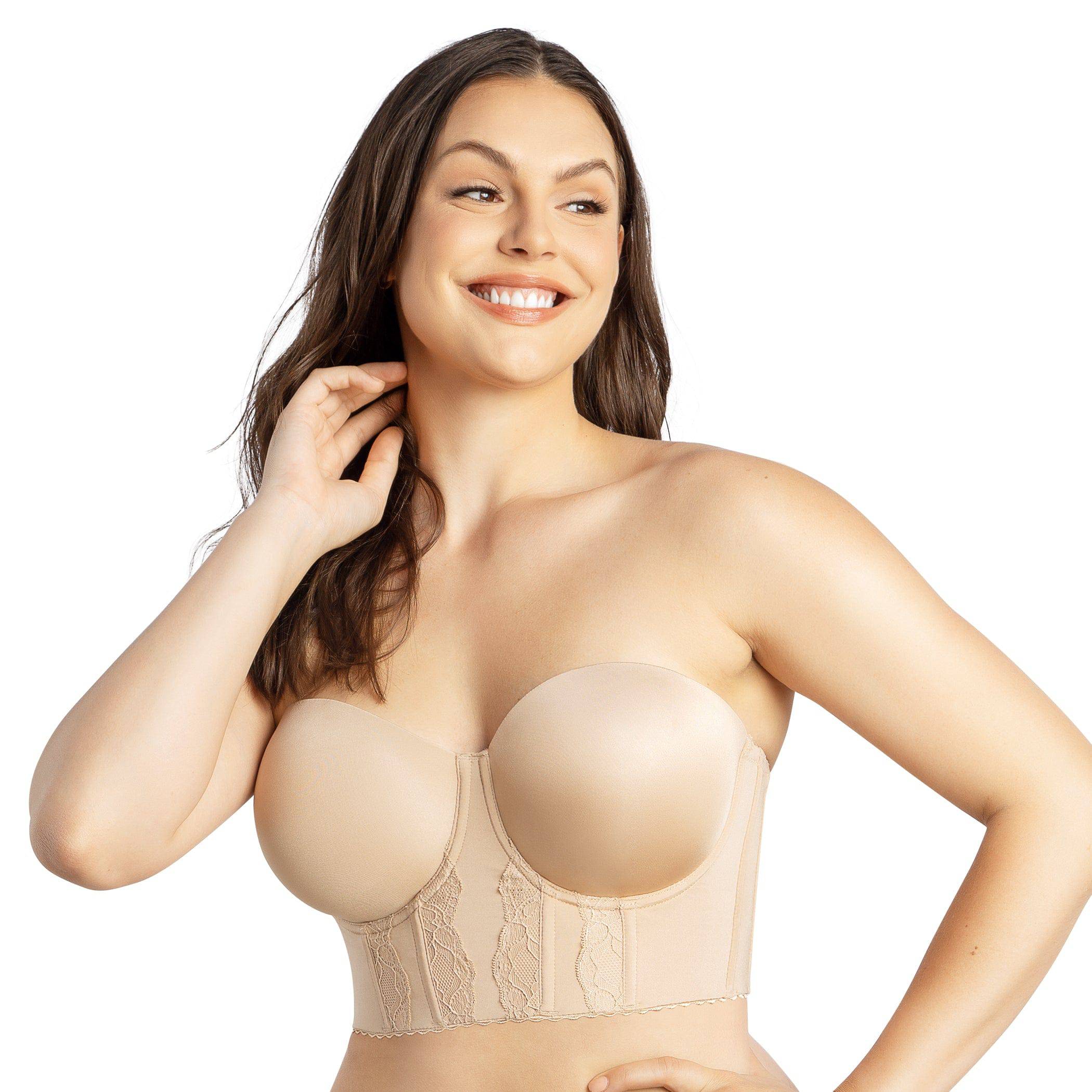
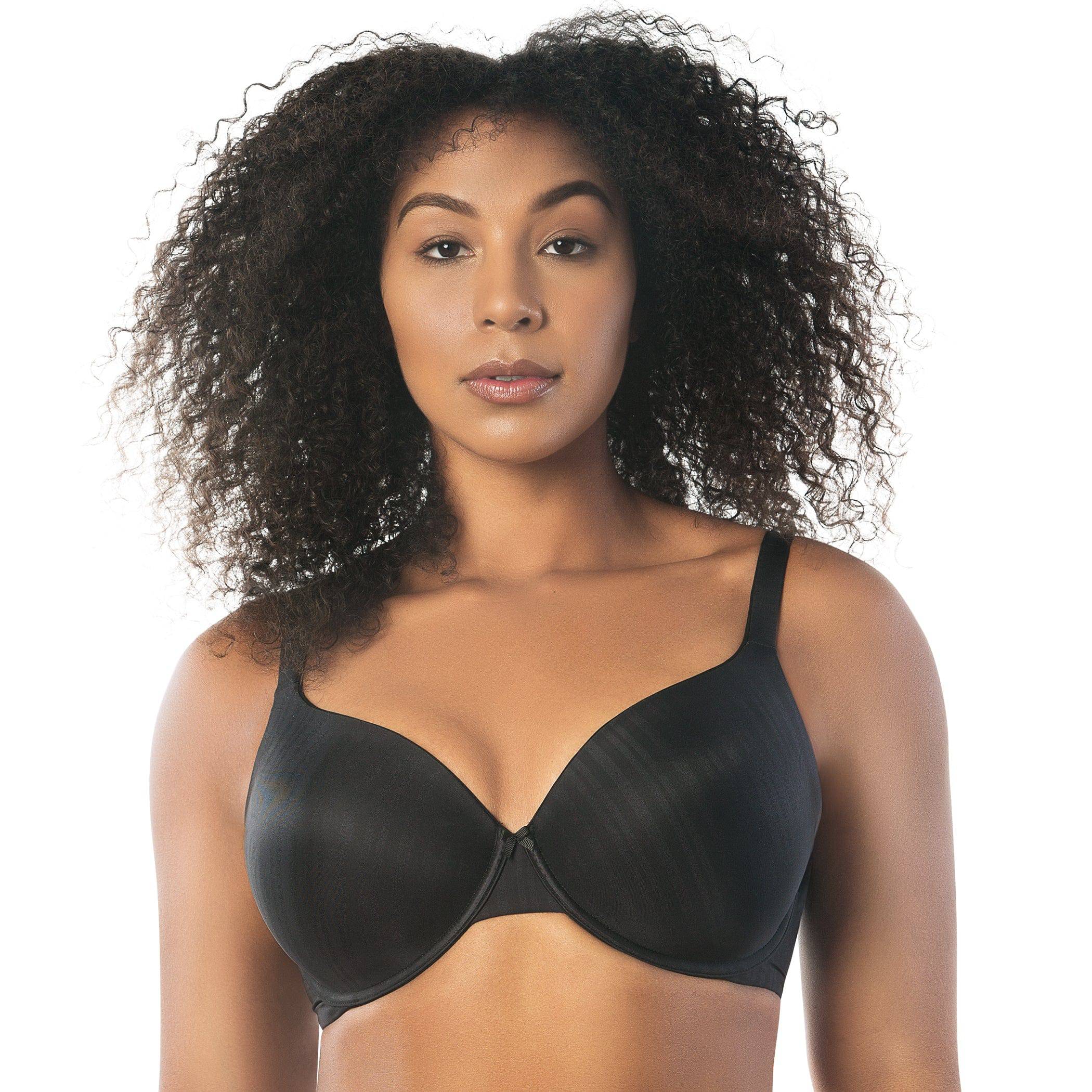
T-shirt bras: Molded cups that may not accommodate projection well
If you’re stuck between 34DD and 32DDD, try both sizes in at least 2-3 different styles and brands before deciding. You might find you prefer 32 bands in unlined bras but 34 bands in molded T-shirt styles.
Other construction details affect fit too: strap placement (wide-set straps can slip on narrow shoulders), wing height (tall wings provide more side support but can feel restrictive), and gore height (tall gores can dig into the sternum on close-set breasts). Petite frames wearing 32/34 bands should pay special attention to these elements.
Availability, labeling, and shopping tips for 34DD and 32DDD
Here’s the hard truth: 34DD is significantly easier to find in big-box and mall stores, while 32DDD can be more limited. Many retailers simply don’t stock smaller band sizes with larger cups, pushing women into the wrong size out of convenience.
Common label equivalents to know:
|
US Size |
UK Equivalent |
Notes |
|---|---|---|
|
32DDD |
32E |
Sometimes labeled 32F in US |
|
34DD |
34DD/34E |
Depends on brand system |
|
32F (US) |
32E (UK) |
Confusing but common |
You’ll need to check each brand’s size chart before ordering online. What Torrid calls a DDD might differ from what a UK brand calls the same thing.
Where to shop:
In the US and Canada, specialty lingerie boutiques, not general department stores, usually carry extended cup sizes like 32DDD. Online retailers have dramatically expanded their 30-32 band ranges over the past decade, making it easier than ever to find these sizes without leaving home.
Victoria’s Secret historically understocked 30 and 32 bands above DD, which meant countless women got pushed into 34DD or 36D even when a smaller band would have provided a better fit. If you were sized there years ago and told you’re a 34DD, it’s worth getting remeasured.
Smart shopping strategy:
When you think you’re a 32DDD, also try:
-
32F (if available in that brand’s sizing)
-
34DD
-
30G
Compare support and comfort across sizes. Keep notes on which brands run tight or loose in the band and small or large in the cup. Some brands are known for stretchier bands, meaning their 32 feels like another brand’s 34.
When you find a bra that fits unusually well, consider buying a backup. Styles get discontinued, and nothing’s more frustrating than losing your best bra to wear and tear with no replacement available.

When to size up, down, or seek a professional fitting
Trial and error is completely normal in bra fitting. Don’t feel discouraged if the first size you try doesn’t work. There are clear signs that point toward specific adjustments.
When to size down the band (e.g., 34DD → 32DDD or smaller):
-
Band rides up constantly, even on the tightest hook
-
You’re using the tightest hooks from day one on a new bra
-
Straps are doing most of the lifting work
-
You can easily fit more than two fingers under the band
-
The band stretches significantly when you pull it
When to size up the cup (e.g., 32DDD → 32G/34DD+):
-
Breasts spill over the top or sides of cups
-
Wires sit on breast tissue instead of around it
-
Center gore never lies flat despite a snug band
-
You see the dreaded quad-boob in fitted clothing
-
Cups cut into breast tissue creating visible lines
Professional fitting options:
Getting fitted at a reputable boutique, not just a mall chain, can be life changing. Independent stores in major cities often have trained fitters experienced with D+ sizes who understand sister sizing, shape considerations, and brand differences.
If in-person fitting isn’t accessible, online communities like ABraThatFits on Reddit offer crowd sourced fit checks. You can post your measurements and even fit photos (with privacy) to get feedback from people who’ve been through the same sizing struggles.
The fact that you’re comparing 34DD vs 32DDD is a good sign. You’re close to your correct size. With small adjustments in band, cup, and style, you can absolutely find something that truly fits and supports you.
Don’t settle for “good enough.” A well-fitting bra should feel secure without being painful, support without digging, and make you forget you’re wearing it by lunchtime. That bra exists, you just need to determine which combination of band, cup, and style gets you there.
Good luck on your fitting journey. The difference the correct size makes is worth every bit of effort.